Criollo mango (Mangifera indica L.) seed: Residue with great potential for obtaining films
DOI:
https://doi.org/10.55996/dekamuagropec.v7i1.398Keywords:
Almond; elongation; starch; strength; solubilityAbstract
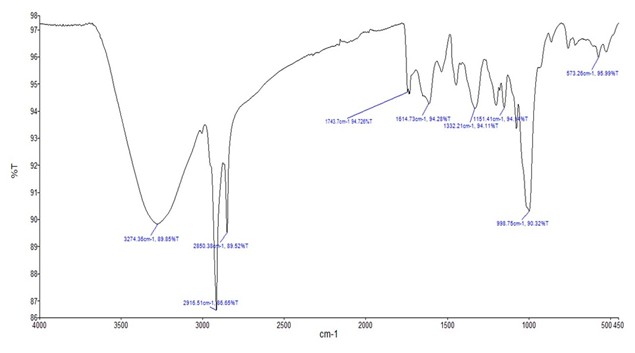
The increasing consumption of fruits and vegetables generates residues such as peels and seeds which, when not properly utilized, cause environmental pollution. In this context, the aim of this research was to obtain biodegradable films from Criollo mango seed (Mangifera indica L.) from the Lambayeque region, Peru. Ripe mangoes were used, and the kernel was separated from the seed for starch extraction. The characterization of the kernel and starch was carried out using AOAC-2016 methods, while the functional groups were identified through Fourier Transform Infrared Spectroscopy (FTIR). The films were prepared using starch concentrations of 8, 10, 12, 14, and 16% in aqueous solution (w/v), with the addition of glycerin and acetic acid. The results showed 80.51% carbohydrates in the kernel, a starch yield of 69.50%, an amylose content of 29.7±0.2%, and an amylopectin content of 70.3±0.2%. Formulation D showed the best results, with a thickness of 0.247 ± 0.03 mm, solubility of 42.584 ± 0.62%, tensile strength of 0.376 ± 0.08 MPa, and elongation at break of 33.045 ± 3.82%, demonstrating suitable physical and mechanical properties for its potential application as a biodegradable material.
Downloads
References
Acosta, H., Villada, H. S., Narváez, A. E., Escandón, J. M., Ramírez, P. C., Ossa, O., & Ospina, B. (2024). Efecto de las variables de operación de un extrusor de uso sencillo sobre las propiedades mecánicas de almidón termoplástico hecho de almidón agrio de yuca. Facultad de Ciencias Agropecuarias, 2(1), 18–26. https://hdl.handle.net/20.500.14330/PER01000269545
Akhter, M. J., Sarkar, S., Rayhanujjaman, M., Kabir, M. S., & Hosain, M. M. (2024). Characterization of mango seed kernel starch: Extraction and Analysis. Food Chemistry Advances, 5, 100806. https://doi.org/10.1016/j.focha.2024.100806
Araujo-Farro, P. C., Podadera, G., Sobral, P. J. A., & Menegalli, F. C. (2010). Development of films based on quinoa (Chenopodium quinoa, Willdenow) starch. Carbohydrate Polymers, 81(4), 839–848. https://doi.org/10.1016/j.carbpol.2010.03.051
Arham, R., Mulyati, M. T., Metusalach, M., & Salengke, S. (2016). Physical and mechanical properties of agar based edible film with glycerol plasticizer. International Food Research Journal, 23(4), 1669–1675.
Basiak, E., Lenart, A., & Debeaufort, F. (2017). Effect of starch type on the physico-chemical properties of edible films. International Journal of Biological Macromolecules, 98, 348–356. https://doi.org/10.1016/j.ijbiomac.2017.01.122
Benavente, M., Calderón, Á., Rivadeneira, D., & Rodriguez, K. (2012). Planeamiento estratégico del mango en la región Lambayeque. Pontificia Universidad Católica Del Perú.
Bharti, I., Singh, S., & Saxena, D. C. (2019). Influence of alkali treatment on physicochemical, pasting, morphological and structural properties of mango kernel starches derived from Indian cultivars. International Journal of Biological Macromolecules, 125, 203–212. https://doi.org/10.1016/j.ijbiomac.2018.12.034
Correa, D., Romero, B., & León, N. (2019). Extraction of tannins from creole mango seed (Mangifera indica L.) and its application as tanning. Journal of Agro-Industry Sciences, 1(2), 51–55. https://doi.org/10.17268/JAIS.2019.007
Cruz-Tirado, J. P., Vejarano, R., Tapia-Blácido, D. R., Barraza-Jáuregui, G., & Siche, R. (2019). Biodegradable foam tray based on starches isolated from different Peruvian species. International Journal of Biological Macromolecules, 125, 800–807. https://doi.org/10.1016/j.ijbiomac.2018.12.111
Ferreira, S., Araujo, T., Souza, N., Rodrigues, L., Lisboa, H. M., Pasquali, M., Trindade, G., & Rocha, A. P. (2019). Physicochemical, morphological and antioxidant properties of spray-dried mango kernel starch. Journal of Agriculture and Food Research, 1, 100012. https://doi.org/10.1016/j.jafr.2019.100012
Hoover, R., & Ratnayake, W. S. (2001). Determination of Total Amylose Content of Starch. Current Protocols in Food Analytical Chemistry, 00(1). https://doi.org/10.1002/0471142913.fae0203s00
Jurado-Erazo, D. K., Tulcán-Cuasapud, Y. A., & Rojas González, A. F. (2023). Perspectivas de valorización de residuos de frutas a partir de sus características físicas. Ciencia y Tecnología Agropecuaria, 24(1). https://doi.org/10.21930/rcta.vol24_num1_art:3016
Martins, S. H. F., Pontes, K. V., Fialho, R. L., & Fakhouri, F. M. (2022). Extraction and characterization of the starch present in the avocado seed (Persea americana mill) for future applications. Journal of Agriculture and Food Research, 8, 100303. https://doi.org/10.1016/j.jafr.2022.100303
Maulida, Kartika, T., Harahap, M. B., & Ginting, M. H. S. (2018). Utilization of mango seed starch in manufacture of bioplastic reinforced with microparticle clay using glycerol as plasticizer. IOP Conference Series: Materials Science and Engineering, 309, 012068. https://doi.org/10.1088/1757-899X/309/1/012068
Mejía Giraldo, L. F., Martínez Correa, H. A., Betancourt Gutiérrez, J. E., & Castrillón Castaño, C. E. (2007). Aprovechamiento del residuo agroindustrial del mango común (Mangifera indica L.) en la obtención de azúcares fermentables. Ingeniería y Ciencia - Ing.Cienc., 3(6), 41–62. http://publicaciones.eafit.edu.co/index.php/ingciencia/article/view/440
Meza Ramos, P. N. (2016). Elaboración De Bioplásticos a Partir De Almidón Residual Obtenido De Peladoras De Papa Y Determinación De Su Biodegradabilidad a Nivel De Laboratorio. Universidad Nacional Agraria La Molina, 1–86. https://hdl.handle.net/20.500.12996/2016
Nawab, A., Alam, F., Haq, M. A., & Hasnain, A. (2016). Biodegradable film from mango kernel starch: Effect of plasticizers on physical, barrier, and mechanical properties. Starch - Stärke, 68(9–10), 919–928. https://doi.org/10.1002/star.201500349
Pérez López, A. F. (2021). Evaluación para la obtención de almidón aprovechando los residuos de mango (Mangifera Indica L.) para la producción de un biopolímero.
Pitak, N., & Rakshit, S. K. (2011). Physical and antimicrobial properties of banana flour/chitosan biodegradable and self sealing films used for preserving Fresh-cut vegetables. LWT - Food Science and Technology, 44(10), 2310–2315. https://doi.org/10.1016/j.lwt.2011.05.024
Ramos Briceño, L. N., & Forero Castañeda, J. C. (2016). Análisis fitoquímico preliminar de la especie vegetal Duranta mutisii (Bogotá-Colombia). Boletín Semillas Ambientales, 10(2), 46–54.
Ruiloba, I., Li, M., Quintero, R., & Correa, J. (2018). Elaboración de bioplástico a partir de almidón de semillas de mango. Revista de Iniciación Científica, 4, 28–32. https://doi.org/10.33412/rev-ric.v4.0.1815
Saavedra, J. K. (2000). Obtención y caracterización del almidón de la almendra del mango (Mangifera indica L.) variedad criollo. 117.
Torres-León, C., Vicente, A. A., Flores-López, M. L., Rojas, R., Serna-Cock, L., Alvarez-Pérez, O. B., & Aguilar, C. N. (2018). Edible films and coatings based on mango (var. Ataulfo) by-products to improve gas transfer rate of peach. LWT, 97, 624–631. https://doi.org/10.1016/j.lwt.2018.07.057
Trujillo Rivera, C. T. (2014). Obtención de películas biodegradables a partir de almidón de yuca ( Manihot Esculenta Crantz ) doblemente modificado. para uso en empaque de alimentos. In Ciência e Tecnologia de Alimentos. http://repositorio.unamad.edu.pe/bitstream/handle/UNAMAD/65/004-2-1-013.pdf?sequence=1
Ventura-Avalos, Y., Díaz-Soto, R., Soriano-Colchado, J., & Barraza-Jáuregui, G. (2024). Chemical modification of starch from fruit seeds: Methods, properties, and applications. Scientia Agropecuaria, 15(2), 311–325. https://doi.org/10.17268/sci.agropecu.2024.024
Warren, F. J., Gidley, M. J., & Flanagan, B. M. (2016). Infrared spectroscopy as a tool to characterise starch ordered structure—a joint FTIR–ATR, NMR, XRD and DSC study. Carbohydrate Polymers, 139, 35–42. https://doi.org/10.1016/j.carbpol.2015.11.066
Zhang, Y., Li, G., Wu, Y., Yang, Z., & Ouyang, J. (2019). Influence of amylose on the pasting and gel texture properties of chestnut starch during thermal processing. Food Chemistry, 294, 378–383. https://doi.org/10.1016/j.foodchem.2019.05.070
Downloads
Published
How to Cite
Issue
Section
License
Copyright (c) 2026 Luis Torres Diaz, Gerson Anticona Cabellos, Blanca Margarita Romero Guzmán, Noemí León-Roque

This work is licensed under a Creative Commons Attribution 4.0 International License.
Los autores que publican en esta revista aceptan los siguientes términos:
- Los autores conservan los derechos de autor y conceden a la revista el derecho publicación con la obra, simultáneamente licenciada bajo una licencia de Creative Commons CC By que permite a otros compartir el trabajo, pero citando la publicación inicial en esta revista.
- Los autores pueden celebrar acuerdos contractuales adicionales separados para la distribución no exclusiva de la versión publicada de la obra de la revista (por ejemplo, publicarla en un repositorio institucional o publicarla en un libro), pero citando la publicación inicial en esta revista.
- Se permite y anima a los autores a publicar su trabajo en línea (por ejemplo, en repositorios institucionales o en su sitio web) antes y durante el proceso de presentación, ya que puede conducir a intercambios productivos, así como una mayor citación del trabajo publicado (https://web-archive.southampton.ac.uk/opcit.eprints.org/oacitation-biblio.html)