The effect of Capsicum pubescens "rocoto pepper" on the in vitro survival of Staphylococcus aureus
DOI:
https://doi.org/10.55996/dekamuagropec.v6i2.373Keywords:
Bacterial activity; natural alternatives; Capsicum pubescens extract; inhibition of Staphylococcus aureus; antimicrobial propertiesAbstract
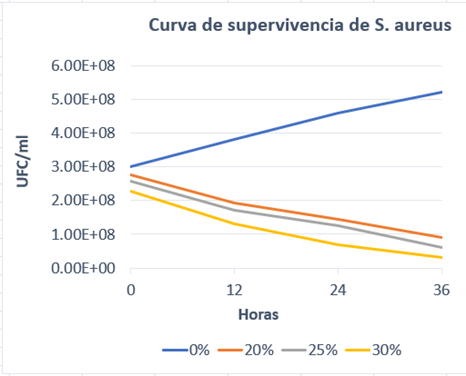
The objective of this research was to evaluate the antimicrobial effect of Capsicum pubescens (rocoto) on the survival of Staphylococcus aureus; a pathogenic bacterium associated with various infections. The study aimed to explore natural alternatives to combat the proliferation of this pathogen, leveraging the antimicrobial properties of rocoto. Extracts of Capsicum pubescens were prepared and their effect on S. aureus isolated from a volunteer donor was evaluated. The incubation method at 4°C and colony counting on blood agar were used, with concentrations of 20%, 25%, and 30% rocoto cream. The results showed that all evaluated concentrations inhibited bacterial growth, with higher effectiveness at 25% and 30% concentrations. The findings suggest that Capsicum pubescens could be an effective natural alternative for the treatment of bacterial infections, particularly those caused by S. aureus, and open the possibility for further investigation into its use in therapies as an alternative to conventional antibiotics.
Downloads
References
Aldayel, M. F. (2023). The synergistic effect of capsicum aqueous extract (Capsicum annuum) and chitosan against multidrug-resistant bacteria. Journal of King Saud University - Science, 35(2), 102438. https://doi.org/10.1016/j.jksus.2022.102438
Bangar, S. P., Chaudhary, V., Sharma, N., Bansal, V., Ozogul, F., & Lorenzo, J. M. (2023). Kaempferol: A flavonoid with wider biological activities and its applications. Critical Reviews in Food Science and Nutrition, 63(28), 9580–9604. https://doi.org/10.1080/10408398.2022.2067121
Carhuancho Gonzáles, P. E., & Huarcaya Estrada, J. W. (2018). Efecto antibacteriano a diferentes concentraciones del extracto etanólico del fruto de Capsicum pubescens “rocoto” en cepas estándares. 21–22. http://repositorio.uwiener.edu.pe/bitstream/handle/123456789/2299/TITULO - CARHUANCHO - HUARCAYA.pdf?sequence=4&isAllowed=y
Espinoza Acebedo, K. L. (2019). Capacidad antioxidante y contenido de polifenoles totales del extracto metalonico del fruto Capsicum pubescens(Rocoto). 0–3.
Espinoza Gillermo, A. C., & Lázaro Guzmán, Y. Y. (2016). Elaboración de crema picante a base de (Capsicum pubescens) rocoto y (Satureja panicera) panizara. In Вестник Росздравнадзора (Vol. 17, Issue 2).
Füchtbauer, S., Mousavi, S., Bereswill, S., & Heimesaat, M. M. (2021). Antibacterial properties of capsaicin and its derivatives and their potential to fight antibiotic resistance – A literature survey. European Journal of Microbiology and Immunology, 11(1), 10–17. https://doi.org/10.1556/1886.2021.00003
Gahongayire, S., Ntulume, I., Ervine, K., Évariste, B., & Aliero, A. A. (2018). In vitro antibacterial activity of ethanolic crude extracts of Capsicum annum against Staphylococcus aureus and Escherichia coli isolated from pus and stool samples at Ruhengeri Referral Hospital, Rwanda. Novel Research in Microbiology Journal, 2(6), 156–166. https://doi.org/10.21608/NRMJ.2018.22708
Goy, R. C., Morais, S. T. B., & Assis, O. B. G. (2016). Evaluation of the antimicrobial activity of chitosan and its quaternized derivative on E. coli and S. aureus growth. Revista Brasileira de Farmacognosia, 26(1), 122–127. https://doi.org/10.1016/j.bjp.2015.09.010
Hernández Sampieri, R., Fernández Collado, C., & Baptista Lucio, P. (2014). Metodología de la investigación.
Mayorga-Ponce, R. B., Monroy-Hernández, A., Hernández-Rubio, J., Roldan-Carpio, A., & Reyes-Torres, S. B. (2021). Programa SPSS SPSS Program. Publicación Semestral, 10(21), 282–284. https://repository.uaeh.edu.mx/revistas/index.php/ICSA/issue/archive
Muntané Relat, J. (2010). Introducción a la investigación básica. 33(3), 221–227.
Nakamoto, M., Kunimura, K., Suzuki, J., & Kodera, Y. (2019). Antimicrobial properties of hydrophobic compounds in garlic: Allicin, vinyldithiin, ajoene and diallyl polysulfides (Review). Experimental and Therapeutic Medicine. https://doi.org/10.3892/etm.2019.8388
Naves, E. R., de Ávila Silva, L., Sulpice, R., Araújo, W. L., Nunes-Nesi, A., Peres, L. E. P., & Zsögön, A. (2019). Capsaicinoids: Pungency beyond Capsicum. Trends in Plant Science, 24(2), 109–120. https://doi.org/10.1016/j.tplants.2018.11.001
Periferakis, A., Periferakis, K., Badarau, I. A., Petran, E. M., Popa, D. C., Caruntu, A., Costache, R. S., Scheau, C., Caruntu, C., & Costache, D. O. (2022). Kaempferol: Antimicrobial Properties, Sources, Clinical, and Traditional Applications. International Journal of Molecular Sciences, 23(23), 15054. https://doi.org/10.3390/ijms232315054
Periferakis, A. T., Periferakis, A., Periferakis, K., Caruntu, A., Badarau, I. A., Savulescu-Fiedler, I., Scheau, C., & Caruntu, C. (2023). Antimicrobial Properties of Capsaicin: Available Data and Future Research Perspectives. Nutrients, 15(19), 4097. https://doi.org/10.3390/nu15194097
Salazar Sánchez, E. A. (2016). Efecto bacteriostático y bactericida de extractos de ají panca (Capsicum chinense) y pimiento (Capsicum annuum var. annuum) sobre cultivos de Escherichia coli ATCC 25922 y Staphylococcus aureus ATCC 25923. Universidad Nacional Mayor De San Marcos, 99. https://cybertesis.unmsm.edu.pe/handle/20.500.12672/5034
Sami, R., Almatrafi, M., Elhakem, A., Alharbi, M., Benajiba, N., & Helal, M. (2021). Effect of Nano Silicon Dioxide Coating Films on the Quality Characteristics of Fresh-Cut Cantaloupe. Membranes, 11(2), 140. https://doi.org/10.3390/membranes11020140
Sami, R., Elhakem, A., Almushhin, A., Alharbi, M., Almatrafi, M., Benajiba, N., Fikry, M., & Helal, M. (2021). Enhancement in physicochemical parameters and microbial populations of mushrooms as influenced by nano-coating treatments. Scientific Reports, 11(1), 7915. https://doi.org/10.1038/s41598-021-87053-w
Sami, R., Khojah, E., Elhakem, A., Benajiba, N., Helal, M., Alhuthal, N., Alzahrani, S. A., Alharbi, M., & Chavali, M. (2021). Performance Study of Nano/SiO2 Films and the Antimicrobial Application on Cantaloupe Fruit Shelf-Life. Applied Sciences, 11(9), 3879. https://doi.org/10.3390/app11093879
Sami, R., Soltane, S., & Helal, M. (2021). Microscopic Image Segmentation and Morphological Characterization of Novel Chitosan/Silica Nanoparticle/Nisin Films Using Antimicrobial Technique for Blueberry Preservation. Membranes, 11(5), 303. https://doi.org/10.3390/membranes11050303
Srinivasan, K. (2016). Biological Activities of Red Pepper ( Capsicum annuum ) and Its Pungent Principle Capsaicin: A Review. Critical Reviews in Food Science and Nutrition, 56(9), 1488–1500. https://doi.org/10.1080/10408398.2013.772090
Valipour, M., Hosseini, A., Di Sotto, A., & Irannejad, H. (2023). Dual action anti‐inflammatory/antiviral isoquinoline alkaloids as potent naturally occurring anti‐SARS‐CoV ‐2 agents: A combined pharmacological and medicinal chemistry perspective. Phytotherapy Research, 37(5), 2168–2186. https://doi.org/10.1002/ptr.7833
Vuković, S., Popović-Djordjević, J. B., Kostić, A. Ž., Pantelić, N. D., Srećković, N., Akram, M., Laila, U., & Katanić Stanković, J. S. (2023). Allium Species in the Balkan Region—Major Metabolites, Antioxidant and Antimicrobial Properties. Horticulturae, 9(3), 408. https://doi.org/10.3390/horticulturae9030408
Wayne, D. W. (2006). Bioestadística: Base para el análisis de las ciencias de la salud. www.FreeLibros.me
Downloads
Published
How to Cite
Issue
Section
License
Copyright (c) 2025 Gildert Pérez-Cubas, Olga Lorena Adrianzen-Guzman, Karla Lucía Gonzales-Castro, Daniela Anapaula Leyva-Fernández, Alisson Karito Romero-Izquierdo, Nílton Vásquez-Mena

This work is licensed under a Creative Commons Attribution 4.0 International License.
Los autores que publican en esta revista aceptan los siguientes términos:
- Los autores conservan los derechos de autor y conceden a la revista el derecho publicación con la obra, simultáneamente licenciada bajo una licencia de Creative Commons CC By que permite a otros compartir el trabajo, pero citando la publicación inicial en esta revista.
- Los autores pueden celebrar acuerdos contractuales adicionales separados para la distribución no exclusiva de la versión publicada de la obra de la revista (por ejemplo, publicarla en un repositorio institucional o publicarla en un libro), pero citando la publicación inicial en esta revista.
- Se permite y anima a los autores a publicar su trabajo en línea (por ejemplo, en repositorios institucionales o en su sitio web) antes y durante el proceso de presentación, ya que puede conducir a intercambios productivos, así como una mayor citación del trabajo publicado (https://web-archive.southampton.ac.uk/opcit.eprints.org/oacitation-biblio.html)