Teleenfermería mejora el conocimiento de cuidado del neonato en madres primerizas: Un estudio de caso en el Hospital II-1, Moyobamba, Perú
DOI:
https://doi.org/10.55996/manguar.v5i1.386Palabras clave:
Madres primerizas, teleenfermería, nivel de conocimiento, neonatosResumen
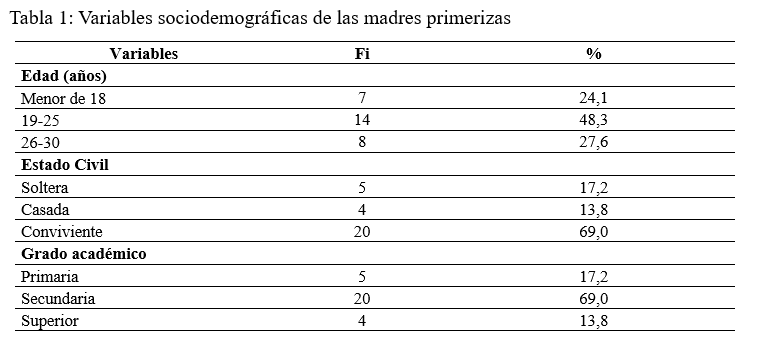
There is a high infant mortality rate during the first 28 days of life, often due to complications that can be prevented or treated. Therefore, the effect of tele-nursing on improving knowledge of newborn care among first-time mothers at Hospital II-1 in Moyobamba was evaluated in 2022. The study used a quantitative cross-sectional design. The sample consisted of 29 first-time mothers selected based on their meeting the eligibility criteria. Data were collected using the questionnaire titled “Level of Knowledge Regarding Neonatal Nursing Care,” with a reliability coefficient of 0.89. The results prior to the tele-nursing intervention indicated that 34% had a low level of knowledge, 66% had a moderate level, and 0% had a high level; whereas in the post-intervention assessment, 21% had a moderate level of knowledge and 79% achieved a high level. It is concluded that tele-nursing is effective in improving the level of knowledge regarding neonatal care among first-time mothers at Hospital II – 1 in Moyobamba and that it could be implemented in other healthcare institutions.
Descargas
Citas
Alsadat, Z., Maghsoudi, J., Barekatain, B., y Marofi, M. (2019). Effect of Telenursing on Attachment and Stress in Mothers of Preterm Infants. Iranian Journal of Neonatology, 10(1), 66-70. https://doi.org/10.22038/IJN.2018.29890.1406
Alva, S. (2020). Análisis y comparación de la eficacia de una intervención por teleconsulta en el ámbito pediátrico. [tesis doctoral, Universidad Complitence de Madrid]. https://eprints.ucm.es/id/eprint/65156/1/T42380.pdf
Bahmanpour, S., Shirinabadi, A., Nourian, M., file:///C:/Users/ProgramasSociales/Downloads/1503-Original Article-9649-1-10-20211229 (3).pdf Nasari, M., Nikfarid, L., y Bana, B. (2022). The impact of telenursing on hope and perceived self-efficacy of the mothers of premature infants after discharge from the NICU. Journal of Neonatal Nursing. https://doi.org/10.1016/j.jnn.2022.05.001
Castillo, J. (2018). Efectividad de la técnica audiovisual participativa para mejorar el nivel de conocimiento de las primigestas sobre los cuidados del neonato, hospital regional virgen de Fátima, Chachapoyas - 2016.[Tesis para optar el título profesional de enfermería, Universidad Nacional Toribio Rodriguez de Mendoza]. https://hdl.handle.net/20.500.14077/1435
Cordeiro, E. (2020). Herramientas de telesalud para el seguimiento posoperatorio de enfermería en servicios de cirugía mayor ambulatoria. Revista Cubana de Enfermería, 36(3), 01-12
Curioso, W., y Oscuvilca-Tapia, E. (2021). Programas de capacitación para el fortalecimiento de capacidades en informática en enfermería: una perspectiva peruana. Ciencia y Enfermería, 27 (5). https://doi.org/10.29393/CE27-5PCWE20005
Danesh, H., Afsaneh, M., y Vahid, F. (2022). Medical Investigation of the Use of Telenursing in Covid 19 Pandemic: A Mini-Review Study. Journal of Medicinal and Chemical Sciences, 5(2), 162-170. https://doi.org/10.26655/JMCHEMSCI.2022.2.3
Gholami, S., Shirinabadi, A., Alaee, F., Moghadam, F., Boromandnia, N., y Khanali, L. (2021). The Effect of telenursing on the rate of newborn readmission. Journal of Neonatal Nursing, 03(01), 1-5. https://doi.org/10.1016/j.jnn.2021.03.001
Fondo de las Naciones Unidas para la Infancia. (2021). Más de un 80% de las muertes maternas y neonatales son evitables. https://www.unicef.org/dominicanrepublic/comunicados-prensa/mas-de-un-80-de-las-muertes-maternas-y-neonatales-son-evitables
Guerrero, S., (2022). La teleenfermería, un desafío para el sistema de salud peruano. Ciencia y Enfermería, 28 (30). https://doi.org/10.29393/CE28-30CESO10030
Jerin, I., Akter, M., Talukder, K., Qudrat, M., y Abdur, M. (2020). Mobile phone support to sustain exclusive breastfeeding in the community after hospital delivery and counseling: a quasiexperimental study. International breastfeeding, 15(14), 1-11. https://doi.org/10.1186/s13006-020-00258-z
Jinjin, H., Susanha, Y., y Namprom, N. (2022). Breastfeeding self-efficacy, social support, and breastfeeding among Chinese mothers with late preterm infants. Journal of Neonatal Nursing, 28(1), 21-25. https://doi.org/10.1016/j.jnn.2021.07.005
Kartika, D., Nontji, W., Syarif, S., Limoa, E., y Bahar, B. (2020). The effect of Android-Based Health Education on the Autonomy of Postpartum Primipara Mothers in Neonatal Care. European Journal of Molecular & Clinical Medicine, 07(08), 4419-4430. https://doi.org/10.36749/wmm.1.2.55-67.2021
Kebede, A., Cherkos, E., y Taye, E. (2020). Mother’s Knowledge of Neonatal Danger Signs and Health-Seeking Practices and Associated Factors in Debretabor, Northwest Ethiopia: A Community-Based Cross-Sectional Study. Research and Reports in Neonatology, 10, 47-58. https://doi.org/10.2147/RRN.S257768
Khodaparast, M., Rahani, T., Sadeghi, T., Boskabadi, H., y Yaviri, M. (2018). No TitlThe Effect of Training Through Telenursing and Multimedia on The Success of Lactation in Preterm Infants After Discharge. JNKMS, 10(2), 31-51. http://dx.doi.org.10.52547/nkums.10.2.13
Kristova, J., Bachrata, Z., Zuzana, S., y Miklovicova, E. (2021). Implementation of telenursing in the Slovak Repuplic. Uniwersytet Medyczmy w Lublinie, 20, 216-220. https://doi.org/10.2478/pielxxiw-2021-0028
Kshyanaprava, B., Susmita, D., Pradhan, J., Shukla, S., y Srutilekha, M. (2020). Neonatal Danger Signs: Assess the Level of Knowledge Among the PostNatal Mothers, In A View to Develop Informational Booklet In Selected Hospital, Bhubaneswar. European Journal of Molecular & Clinical Medicine, 07(10), 3765-3771
Leta, M. (2022). Level of Knowledge toward essential newborn care practices among postnatal mothers in govermental hospitals of Harar Town, Eastern Ethiopia. Sage Open Medicine, 10, 1-11. https://doi.org/10.1177/20503121221076
Mai, B., Kronborg, H., y Norlyk, A. (2020). Video consultation as nursing practice during early in-home care for premature infants and families viewed from the families homes. Nursing Open, 8, 824–832. https://doi.org/10.1002/nop2.687
Ministerio de Salud. (2022). Mortalidad neonatal y prematuridad. https://www.mesadeconcertacion.org.pe/storage/documentos/2022-11-16/ppt-cdc-minsa-jeannette-avila-15112022.pdf
Organización Mundial de la Salud. (2021). Muerte fetal y neonatal. https://www.dge.gob.pe/portal/docs/vigilancia/sala/2021/SE07/mneonatal.pdf
Organización Mundial de la Salud. (2020). Mejorar la supervivencia y el bienestar de los recién nacidos. https://www.who.int/es/news-room/fact-sheets/detail/newborns-reducing-mortality
Organización Mundial de la Salud. (2005). Cibersalud. https://apps.who.int/iris/handle/10665/23104
Rodriguez, L., Mogollon, F., Zeballos, A., Risco, D, y Diaz, R. (2022). Efecto de una intervención de teleenfermería en contexto pandemia para prevenir anemia infantil: estudio piloto en Lambayeque, Perú, Ciencia y Enfermería, 28 (29). https://doi.org/10.29393/CE28-29EILR50029
Samah, A. (2022). Evaluate Maternal Knowledge and Attitude Regarding First Aid Among their Children in Buraidah City, Ksa. Maternal and Child Health Nursing, 76, 169-174. https://doi.org/ 10.5455/medarh.2022.76.169-174
Sanhueza-Muñoz, M., Valencia, F., y Castillo-Anabel. (2022). Teleenfermería como herramienta para favorecer la autoeficacia en personas con enfermedades crónicas. Ciencia y Enfermería. https://doi.org/10.29393/CE28-33THMA30033
Silva, C., Rangel de Souza, P., Marques da Silva, A., Rita da Silva, M., Vivas dos Santos, D., y Coelho de Soárez, P. (2022). Logical model of telenursing program of a high complexity oncology care center. Rev.esc.enferm, 56. https://doi.org/10.1590/1980-220X-REEUSP-2022-0067en
Soria, A., y Hérnandez, Y. (2022). Intervenciones de enfermería en la encefalopatía hipóxica isquémica aguda por asfixia neonatal. Revista Científica de la Universidad Cienfuegos, 14(2), 230-236.
Supo, J. (2020). Actualización de investigación científica. (3a ed). Arequipa bioestadistico EIRL. https://kupdf.net/downloadFile/58f42a6adc0d60c24cda983
Taquía-Cueva, M., Gallardo, L., García, A., Mendieta, C., Rojas, S., y Árevalo-Ipanaché, J. (2022). Teletriaje/teleorientación de enfermería pediátrica en el contexto en la pandemia por Covid-19. Index Enferm, 31(2):72-76.
Descargas
Publicado
Cómo citar
Número
Sección
Licencia

Esta obra está bajo una licencia internacional Creative Commons Atribución 4.0.
LA REVISTA TIENE UNA POLÍTICA DE ACCESO ABIERTO, CONTANDO CON UNA LICENCIA CC (Licencia Creative Commons Atribución-NoComercial-CompartirIgual 4.0 Internacional).
Aquellos autores/as que tengan publicaciones con esta revista, aceptan los términos siguientes:
- Los autores/as conservarán sus derechos de autor y garantizarán a la revista el derecho de primera publicación de su obra, el cuál estará simultáneamente sujeto a la Licencia de reconocimiento de Creative Commons. Por tanto:
___________________________________
Usted es libre de:
- Compartir — copiar y redistribuir el material en cualquier medio o formato.
- Adaptar — remezclar, transformar y construir a partir del material.
- La licenciante no puede revocar estas libertades en tanto usted siga los términos de la licencia.
Bajo los siguientes términos:
-
Atribución — Usted debe dar crédito de manera adecuada, brindar un enlace a la licencia, e indicar si se han realizado cambios. Puede hacerlo en cualquier forma razonable, pero no de forma tal que sugiera que usted o su uso tienen el apoyo de la licenciante.
-
No Comercial — Usted no puede hacer uso del material con propósitos comerciales.
-
Compartir Igual — Si remezcla, transforma o crea a partir del material, debe distribuir su contribución bajo la lamisma licencia del original.
- No hay restricciones adicionales — No puede aplicar términos legales ni medidas tecnológicas que restrinjan legalmente a otras a hacer cualquier uso permitido por la licencia.
_____________________________________________
- Los autores/as podrán adoptar otros acuerdos de licencia no exclusiva de distribución de la versión de la obra publicada (p. ej.: depositarla en un archivo telemático institucional o publicarla en un volumen monográfico) siempre que se indique la publicación inicial en esta revista.
- Se permite y recomienda a los autores/as difundir su obra a través de Internet (p. ej.: en archivos telemáticos institucionales o en su página web) antes y durante el proceso de envío, lo cual puede producir intercambios interesantes y aumentar las citas de la obra publicada. (Véase El efecto del acceso abierto).