High-strength drawn steel fibers in pervious concrete for rural road infrastructure
DOI:
https://doi.org/10.55996/dekamuagropec.v7i1.377Keywords:
Agricultural roads; ecological concrete; flexural strength; hydraulic conductivityAbstract
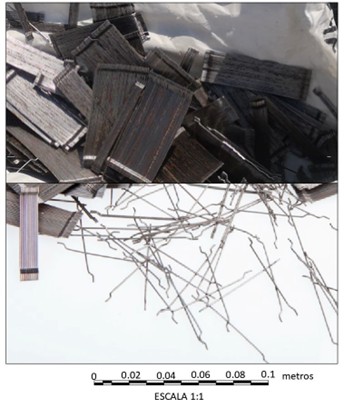
Rural road infrastructure in northern Peru faces critical surface drainage problems that affect connectivity of agricultural areas and market access. Pervious concrete represents a sustainable alternative; however, its low mechanical resistance limits its application in rural rigid pavements. The objective was to determine the influence of high-strength drawn steel fibers (SIKA FIBER CHO 80/60 NB) on the properties of pervious concrete for rural road infrastructure. Aggregates from the «Arenera Jaén» quarry and Pacasmayo Ico Portland cement were used in two stages: base control mix selection and fiber addition at 25, 35 and 45 kg/m³. The control mix recorded f'c = 256.88 kg/cm², Mr = 37.81 kg/cm² and k = 0.31 cm/s. With 45 kg/m³ of fiber, increases of 21.73% in compressive strength, 36.93% in modulus of rupture and 13.73% in permeability were obtained. The incorporation of drawn steel fibers significantly improves the properties of pervious concrete, with its effect proportional to the applied dose.
Downloads
References
Akkaya, A., & Çağatay, İ. H. (2021). Experimental investigation of the use of pervious concrete on high volume roads. Construction and Building Materials, 279, 122430. https://doi.org/10.1016/j.conbuildmat.2021.122430
Altamirano Pérez, H. R., Cadena Pasquel, V. J., Anchundia Guerrero, C. A., & Larcos Perez, J. A. (2023). Application of the Honey - Alonso Questionnaire for the characterization of learning styles in students of Higher Basic Education. Universidad Ciencia y Tecnología, 27(121), 7–15. https://doi.org/10.47460/uct.v27i121.750
American Concrete Institute. (2010). 522R-10: Report on Pervious Concrete. In Technical Documents (Vol. 10, Number Reapproved 2011). https://www.concrete.org/publications/internationalconcreteabstractsportal/m/details/id/51663557
Bright Singh, S., & Madasamy, M. (2022). Investigation of aggregate size effects on properties of basalt and carbon fibre-reinforced pervious concrete. Road Materials and Pavement Design, 23(6), 1305–1328. https://doi.org/10.1080/14680629.2021.1886158
Coronel, J. (2023). Influencia de las fibras de acero trefilado de alta calidad en las propiedades del concreto permeable para pavimentos rígidos. 1–103. https://hdl.handle.net/11042/6470
De Abreu, V. H. S., Santos, A. S., & Monteiro, T. G. M. (2022). Climate Change Impacts on the Road Transport Infrastructure: A Systematic Review on Adaptation Measures. Sustainability, 14(14), 8864. https://doi.org/10.3390/su14148864
Guzmán, C. A. (2016). Influencia de la fibra de acero trefilado de alta calidad y microsílice en la resistencia a flexión del concreto ecológico f’c=210 kg/cm2 para pavimentos rígidos. Universidad Nacional de Cajamarca.
Koo, D.-H., Kim, J.-S., Kim, S.-H., & Suh, S.-W. (2023). Evaluation of Flexural Toughness of Concrete Reinforced with High-Performance Steel Fiber. Materials, 16(20), 6623. https://doi.org/10.3390/ma16206623
Lee, M.-G., Wang, W.-C., Wang, Y.-C., Hsieh, Y.-C., & Lin, Y.-C. (2022). Mechanical Properties of High-Strength Pervious Concrete with Steel Fiber or Glass Fiber. Buildings, 12(5), 620. https://doi.org/10.3390/buildings12050620
Lee, M.-G., Wang, Y.-C., Wang, W.-C., Chien, H.-J., & Cheng, L.-C. (2023). Experimental Study on the Mechanical Properties of Reinforced Pervious Concrete. Buildings, 13(11), 2880. https://doi.org/10.3390/buildings13112880
Lee, M.-G., Wang, Y.-C., Wang, W.-C., & Hsieh, Y.-C. (2024). Abrasion and Maintenance of High-Strength Fiber-Reinforced Pervious Concrete. Buildings, 14(1), 127. https://doi.org/10.3390/buildings14010127
Li, J., Xia, J., Di Sarno, L., & Gong, G. (2023). Fiber utilization in pervious concrete: Review on manufacture and properties. Construction and Building Materials, 406, 133372. https://doi.org/10.1016/j.conbuildmat.2023.133372
Ministerio de Transporte y Comunicaciones. (2013). Manual de Carreteras Especificaciones Técnicas Generales para Construcción EG-2013. Suelos, Geologia, Geotecnia Y Pavimentos, 0(0), 1440. https://cdn-web.construccion.org/normas/files/tecnicas/Manual_Suelos_Pavimentos.pdf
Ministerio de Vivienda Construcción y Saneamiento. (2010). Norma Técnica CE.010 Pavimentos Urbanos. 68. http://www.vivienda.gob.pe/%5Cnhttp://app.knovel.com/
SENAMHI. (2023). Memoria anual. REOP - Revista Española de Orientación y Psicopedagogía, 30(3), I–VI. https://www.senamhi.gob.pe/pdf/trans/memoria-senamhi-2023.pdf
SIKA Perú S.A. (2022). Hoja técnica SIKA FIBER CHO 80/60 NB. https://per.sika.com/es/construccion/otros-aditivos-adiciones/fibras-de-concreto/macrofibra-metalica/sikafiber-cho-8060nb.html
Tamimi, A., Tabsh, S. W., & El-Emam, M. (2023). Pervious Concrete Made with Recycled Coarse Aggregate and Reinforced with Date Palm Leaves Fibers. Materials, 16(23), 7496. https://doi.org/10.3390/ma16237496
Tang, C.-W., Cheng, C.-K., & Ean, L.-W. (2022). Mix Design and Engineering Properties of Fiber-Reinforced Pervious Concrete Using Lightweight Aggregates. Applied Sciences, 12(1), 524. https://doi.org/10.3390/app12010524
Wu, J., Pang, Q., Lv, Y., Zhang, J., & Gao, S. (2022). Research on the Mechanical and Physical Properties of Basalt Fiber-Reinforced Pervious Concrete. Materials, 15(19), 6527. https://doi.org/10.3390/ma15196527
Yun, H.-D., Choi, K.-B., & Choi, W.-C. (2023). Comparative Evaluation of Flexural Toughness of Steel Fiber-Reinforced Concrete Beams. Materials, 16(10), 3789. https://doi.org/10.3390/ma16103789
Downloads
Published
How to Cite
Issue
Section
License
Copyright (c) 2026 Juan Antonio Coronel-Diaz, Marco Antonio Aguirre-Camacho, José Antonio Coronel Delgado

This work is licensed under a Creative Commons Attribution 4.0 International License.
Los autores que publican en esta revista aceptan los siguientes términos:
- Los autores conservan los derechos de autor y conceden a la revista el derecho publicación con la obra, simultáneamente licenciada bajo una licencia de Creative Commons CC By que permite a otros compartir el trabajo, pero citando la publicación inicial en esta revista.
- Los autores pueden celebrar acuerdos contractuales adicionales separados para la distribución no exclusiva de la versión publicada de la obra de la revista (por ejemplo, publicarla en un repositorio institucional o publicarla en un libro), pero citando la publicación inicial en esta revista.
- Se permite y anima a los autores a publicar su trabajo en línea (por ejemplo, en repositorios institucionales o en su sitio web) antes y durante el proceso de presentación, ya que puede conducir a intercambios productivos, así como una mayor citación del trabajo publicado (https://web-archive.southampton.ac.uk/opcit.eprints.org/oacitation-biblio.html)